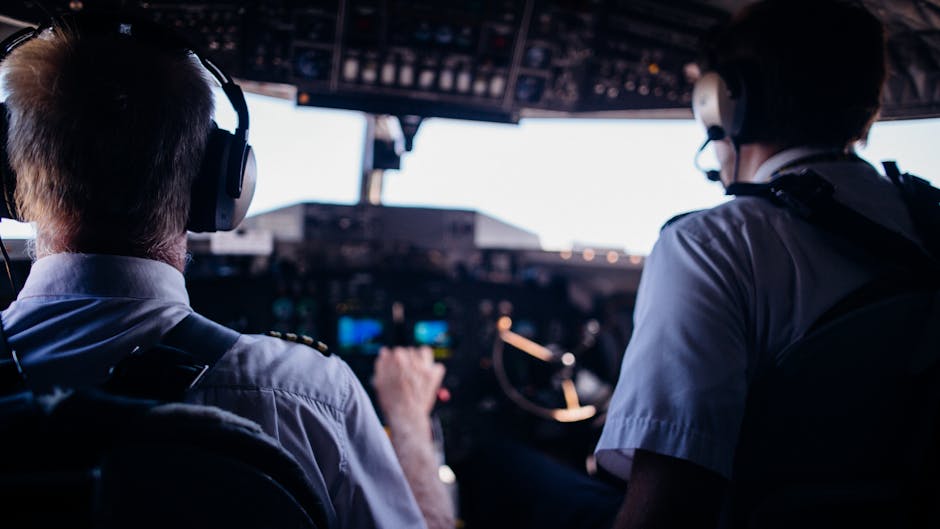

Why sleep matters for pilots
Commercial pilots operate aircraft that carry passengers, cargo, or both across long distances and diverse time zones. Their primary safety responsibility is to monitor complex systems, make rapid decisions, and maintain situational awareness. All of these tasks depend on cognitive functions that are directly linked to sleep quality and quantity.
When a pilot is sleep‑deprived, reaction time slows, short‑term memory fades, and the ability to judge distance or speed deteriorates. Research in aviation psychology shows that performance after 24 hours of wakefulness resembles that of a blood‑alcohol level of 0.10 %—well above most legal limits for driving. Understanding how the body’s internal clock, the circadian rhythm, shapes sleep can help crews and operators plan rest periods that protect both safety and health.
What the circadian rhythm is and how it works
The circadian rhythm is a roughly 24‑hour cycle that regulates hormone release, body temperature, and alertness. The master clock resides in the suprachiasmatic nucleus (SCN) of the hypothalamus and receives its strongest cue from daylight. When light hits the retina, signals travel to the SCN, which then coordinates peripheral clocks throughout the body.
Two hormones are most relevant for pilots:
- Melatonin – rises in dim light, signals the body that it is time to wind down, and peaks during the biological night.
- Cortisol – peaks shortly after waking, helping the body become alert and mobilising energy stores.
If a pilot’s schedule forces wakefulness during the biological night or sleep during the biological day, melatonin production is suppressed and cortisol may remain elevated. The result is fragmented sleep, reduced deep‑slow‑wave sleep (SWS), and a lower proportion of rapid‑eye‑movement (REM) sleep—both essential for memory consolidation and emotional regulation.
Common flight‑crew schedules and their circadian impact
Airline duty rosters fall into several broad patterns. Each pattern presents a distinct challenge to the circadian system.
| Schedule type | Typical pattern | Circadian challenge |
|---|---|---|
| Long‑haul international | Multiple legs, 8‑12 h flight, overnight stay, 2‑3 days between duties | Repeated jet‑lag; difficulty aligning sleep to destination time zone |
| Short‑haul domestic | Multiple legs per day, early‑morning start, late‑evening finish | Extended wake period; “afternoon dip” during mid‑flight |
| Split‑duty (crew‑rest) | Two flight segments with a 2‑4 h rest block in‑flight | Sleep window often falls during circadian trough |
| Reserve/standby | On‑call for unpredictable activation, sleep may be fragmented | Variable timing prevents stable rhythm |
Understanding where each schedule sits relative to the body’s biological night (approximately 02:00–06:00) helps identify the most vulnerable periods.
Identifying the optimal rest window
An “optimal rest window” is a block of time when the circadian system is naturally inclined toward sleep, and when sufficient sleep stages can be achieved. For most adults, this window falls between 22:00 and 07:00 local time, but the exact placement depends on the pilot’s recent exposure to light, prior sleep debt, and upcoming duty.
Three practical guidelines
- Align with the melatonin rise. Aim to start sleep within two hours of the expected melatonin peak for the current time zone. If a pilot has traveled eastward, the peak will shift earlier; exposure to bright light in the morning can accelerate this shift.
- Protect the first half of the night. The first 3–4 hours contain the greatest proportion of SWS, which is critical for physical restoration and procedural memory. Scheduling at least 4 hours of uninterrupted sleep during this period maximises recovery.
- Use short naps strategically. When a full rest window is unavailable, a 20‑minute nap taken during the early afternoon (13:00–15:00) can boost alertness without entering deep sleep, which would otherwise cause sleep inertia if awakened abruptly.
Designing rest blocks for different duty types
Long‑haul international rotations
For flights crossing three or more time zones, pilots typically experience jet‑lag. A proven mitigation strategy combines two elements: pre‑flight phase shift and post‑flight recovery.
- Pre‑flight phase shift: Starting three days before departure, pilots gradually advance or delay bedtime by 30 minutes per day toward the destination zone. Light exposure is timed to reinforce the shift—bright light in the morning for eastward travel, late afternoon light for westward travel.
- Post‑flight recovery: Upon arrival, schedule at least a 7‑hour sleep window aligned with the destination’s night. If the arrival time is early morning, a short “anchor” nap (90 minutes) before the main night’s sleep can preserve REM cycles.
Short‑haul domestic rotations
These schedules often compress wake time into a 12‑hour span, leaving a single night of sleep. The greatest risk is “cumulative fatigue”—a small sleep deficit that builds day after day.
- Maintain a consistent bedtime and wake time, even on off‑days. Consistency stabilises the SCN and reduces the need for a large “catch‑up” sleep.
- If a pilot must start duty before 06:00, allow a pre‑flight “power‑nap” of 20‑30 minutes between 01:00 and 02:00, when the circadian drive for sleep is strongest.
- After the last flight of the day, aim for a sleep window that begins no later than 22:30. Delaying sleep beyond 01:00 markedly reduces SWS proportion.
Split‑duty (crew‑rest) operations
In‑flight rest compartments provide a private environment, but the timing is often dictated by flight‑plan constraints, not the pilot’s biology. The following tactics improve the odds of a restorative nap.
- Dim the cabin lights and use an eye mask to simulate darkness, encouraging melatonin release.
- Use noise‑cancelling headphones or white‑noise generators to minimise interruptions.
- Target a 90‑minute nap when the rest period starts between 00:00 and 03:00. This length allows a full REM‑SWS cycle, reducing sleep inertia upon awakening.
- If the rest block is shorter (30–45 minutes), keep it earlier in the circadian trough (around 02:00) to benefit from the natural dip in alertness.
Reserve and standby duty
Unpredictable call‑outs make it impossible to pre‑schedule sleep. The best approach is to maintain a “sleep bank.”
- Accumulate at least 1.5 hours of nap time each day when not on duty, preferably during the early afternoon.
- On days with expected standby, aim for a longer core sleep of 6‑7 hours the night before, with a brief 20‑minute nap scheduled for the early evening (around 19:00) to pre‑empt the circadian low point.
- When activated, use a “recovery nap” of 20 minutes immediately after landing, if operationally feasible, to reduce post‑flight sleep pressure.
Tools and techniques to monitor circadian alignment
Modern airlines and individual pilots have access to several low‑cost tools that help track circadian health.
- Actigraphy watches – measure movement and infer sleep–wake patterns. Data can be uploaded to software that visualises alignment with scheduled duty.
- Light‑exposure logs – recording the timing, intensity, and duration of bright‑light exposure helps assess whether a pilot is receiving the cues needed for phase shifts.
- Subjective sleep scales – the Karolinska Sleepiness Scale (KSS) can be administered quickly before flight, giving a snapshot of perceived alertness.
- Melatonin saliva tests – while more research‑oriented, these kits can confirm the timing of the melatonin rise for pilots undergoing major time‑zone transitions.
Operational policies that support circadian health
Regulatory bodies such as the FAA and EASA set minimum rest requirements, but many airlines adopt additional policies that directly address circadian considerations.
- Controlled rest periods – scheduled short naps (20‑30 minutes) during ground‑time or flight‑deck breaks, with clear guidance on timing relative to the circadian dip.
- Fatigue risk management systems (FRMS) – formal processes that analyse duty rosters, sleep data, and performance metrics to identify high‑risk periods. An FRMS often includes a “circadian adjustment factor” that adds extra rest when duties fall during the biological night.
- Light‑management cabins – adjustable cabin lighting that mimics daylight can aid phase‑shift during long‑haul flights. Pilots can set “blue‑light” periods to stay alert, then switch to “red‑light” zones for rest.
- Education programs – regular briefings on sleep hygiene, strategic napping, and light exposure empower crews to make informed choices.
Common misconceptions about pilot sleep
Understanding what does not work is as important as knowing the best practices.
- “Coffee can replace sleep.” Caffeine improves alertness for a few hours but does not restore the physiological functions of SWS or REM sleep. Overreliance can mask fatigue and lead to deeper performance deficits later.
- “Sleeping in a hotel is always better than a crew‑rest pod.” The quality of sleep depends on darkness, noise, and comfort, not location. Properly equipped rest pods, with blackout curtains and sound attenuation, can provide comparable recovery if used correctly.
- “If I feel fine, I don’t need extra rest.” Self‑assessment is prone to bias, especially after prolonged exposure to high‑stress environments. Objective measures like actigraphy or KSS help validate perceived alertness.
Putting the science into daily routine
Below is a sample day for a pilot on a short‑haul schedule that incorporates the principles discussed.
- 04:30 – Wake: Exposure to bright light for 20 minutes (sunlight or light box).
- 05:00 – Pre‑flight briefing: Quick KSS check; if score > 7, consider a 15‑minute power nap before leaving the crew lounge.
- 06:00 – Flight departure: Maintain hydration and limit caffeine to one cup before 10:00.
- 09:30 – Mid‑flight break (if permitted): 20‑minute nap in crew‑rest seat, lights dimmed, earplugs used.
- 12:00 – Arrival, post‑flight debrief: Light snack, brief walk outside to obtain daylight.
- 13:00 – Core sleep: 7‑hour block, lights out by 22:30, wake at 05:30. Use eye mask and white noise.
- Evening – Light exposure: Dim lighting after 19:00, avoid screens for the last hour before bed.
This routine respects the melatonin rise, protects the early‑night SWS window, and uses short naps only when they align with the natural circadian dip.
Future directions in pilot‑fatigue research
Scientific interest in circadian health continues to grow. Emerging areas include:
- Genetic profiling – identifying “morningness” vs. “eveningness” alleles may help personalise schedule assignments.
- Wearable EEG devices – provide real‑time data on sleep stage distribution, allowing crews to fine‑tune rest length.
- Adaptive cabin lighting – systems that automatically adjust spectral output based on flight phase and crew circadian status.
- Machine‑learning FRMS models – integrating actigraphy, flight‑deck data, and weather to predict fatigue hotspots before they occur.
While these technologies are not yet standard, they illustrate the trajectory toward a more data‑driven, individualized approach to pilot rest.